Gasoline-to-Electric Retrofit · V2.0 Differential Platform

Keep the tuk-tuk. Replace only the powertrain.

A complete drop-in electric drivetrain kit for aging gasoline auto-rickshaws — engineered around the vehicle’s original half-shafts, so conversion is fast, repeatable and low-cost at fleet scale.
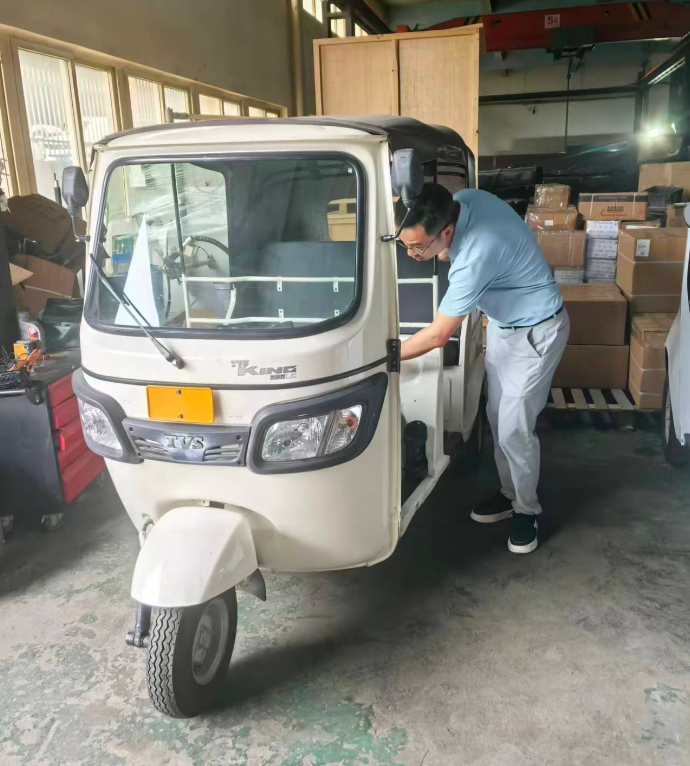
TVS King converted with the V2.0 electric retrofit kit
TVS King · kit in production
4 / 8 kW
Rated / peak motor
8 kWh
LFP battery · under-seat
100–120
km range per charge
≈2 h
Install · TVS King
01 · The economics

Why fleets convert instead of replace

Sri Lanka runs 1.05 M+ registered three-wheelers, most over 7 years old. Petrol is LKR 434/L — fuel alone takes ~17% of a driver’s income. National policy targets all-electric new three-wheeler registrations by 2030.
≈ Rs. 7 /km
vs. Rs. 20–25 /km on petrol
Energy cost per kilometre drops by two-thirds — up to Rs. 20,000 saved per driver per month in typical 80 km/day duty cycles.
⅓
of new-EV price
The chassis, body and suspension of a 5–10 year-old tuk-tuk are still sound — only the powertrain is replaced. The driver keeps the asset.
55–60 dB
vs. 75–85 dB petrol · zero tailpipe
No engine maintenance — no oil, plugs, carburettor or exhaust. Near-silent operation, no street-level emissions.
02 · Engineering

The V2.0 difference: we re-machine the differential, not the half-shafts

Every tuk-tuk model has different half-shaft splines and CV joints. V2.0 moves all model-specific work into the differential — the original shafts bolt straight back on.
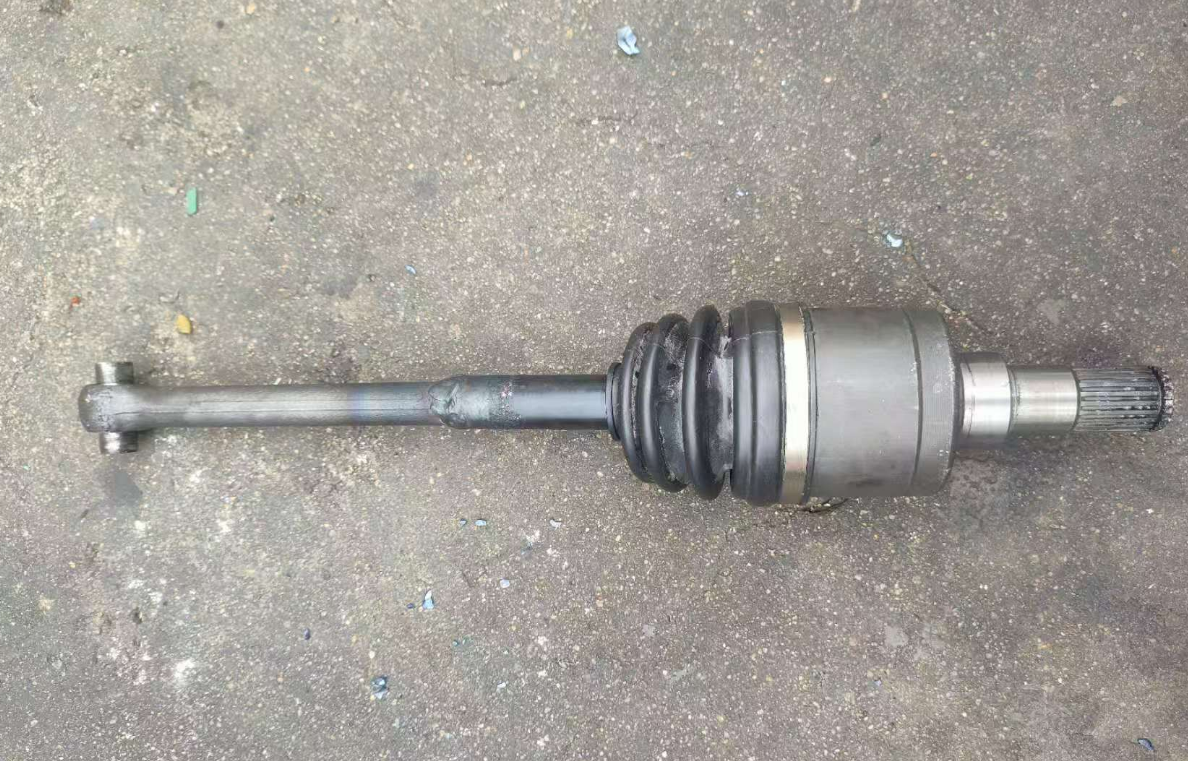
V1.0 custom half-shaft with CV joint
V1.0 · Superseded

Custom half-shaft fabrication

Unique shaft dimensions, splines and CV joints per model — long lead time, high cost, tolerance risk. Not scalable across a mixed fleet.
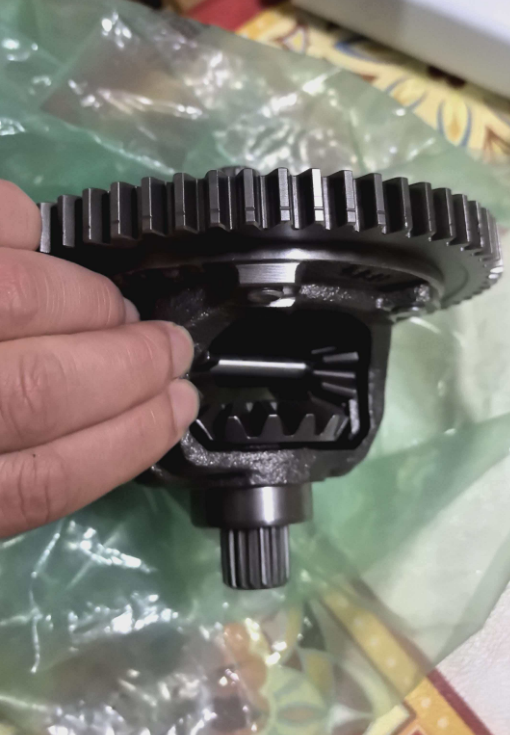
V2.0 re-machined differential gear set
V2.0 · Current platform

Re-machined differential, OEM shafts retained

Housing and gear set re-machined with output splines matched to the vehicle’s original CV joints. Lower cost, faster installation, consistent quality — one kit architecture scales across models.
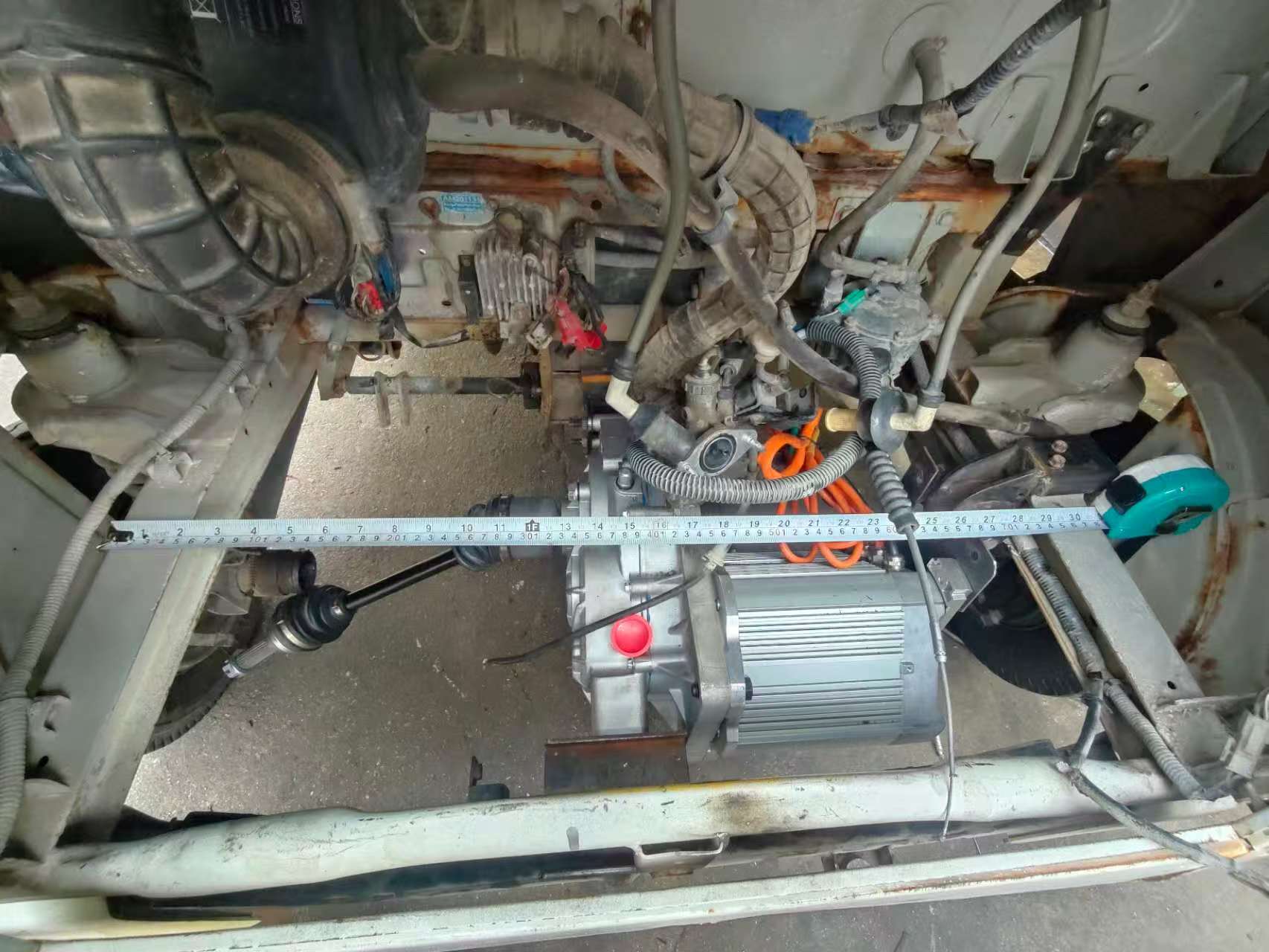
Roadmap: a two-speed integrated drivetrain with fleet battery-swap compatibility is in development as the next platform step.
03 · The kit

Everything in one crate, ready to bolt on

Complete drive system + model-specific fitting kit. SOP manual with torque specs and installation video included with every kit.
4 kW PMSM motor installed
01

4 kW PMSM Motor

72 V · 8 kW peak · 65 N·m · 6,000 rpm · IP67 · air-cooled

FOC
02

Motor Controller

510 A max AC output · CAN 2.0 · IP66 · cruise / anti-theft / multi-mode

8 : 1
03

Single-Speed Gearbox

8:1 reduction · rear-mounted rear drive · oil-lubricated

Re-machined differential set
04

Re-machined Differential Set

OEM CV-joint match · inner CV joints included · original half-shafts retained
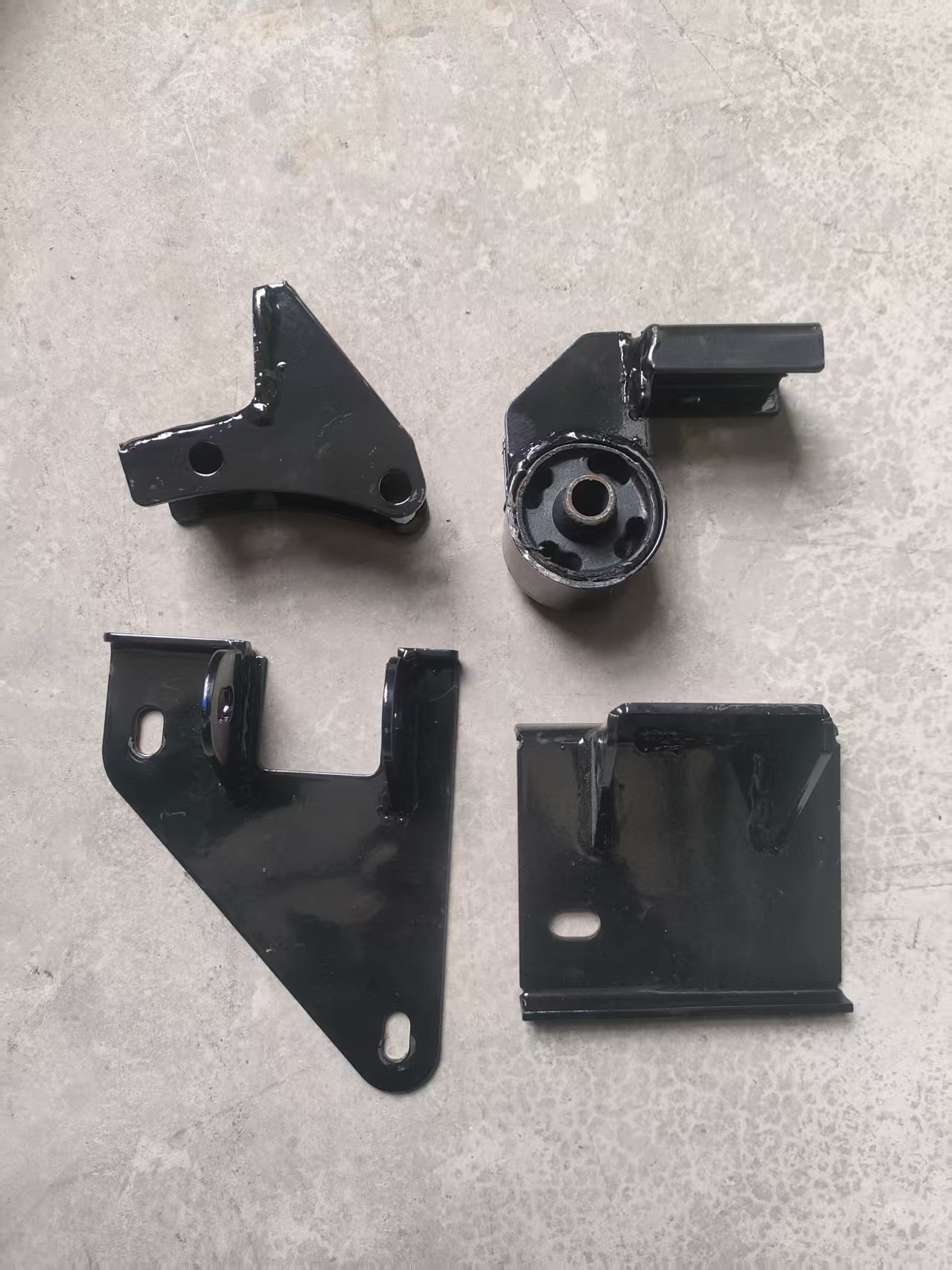
Mounting bracket set
05

Mounting Bracket Set

Model-specific, rubber-isolated · TVS King set in production
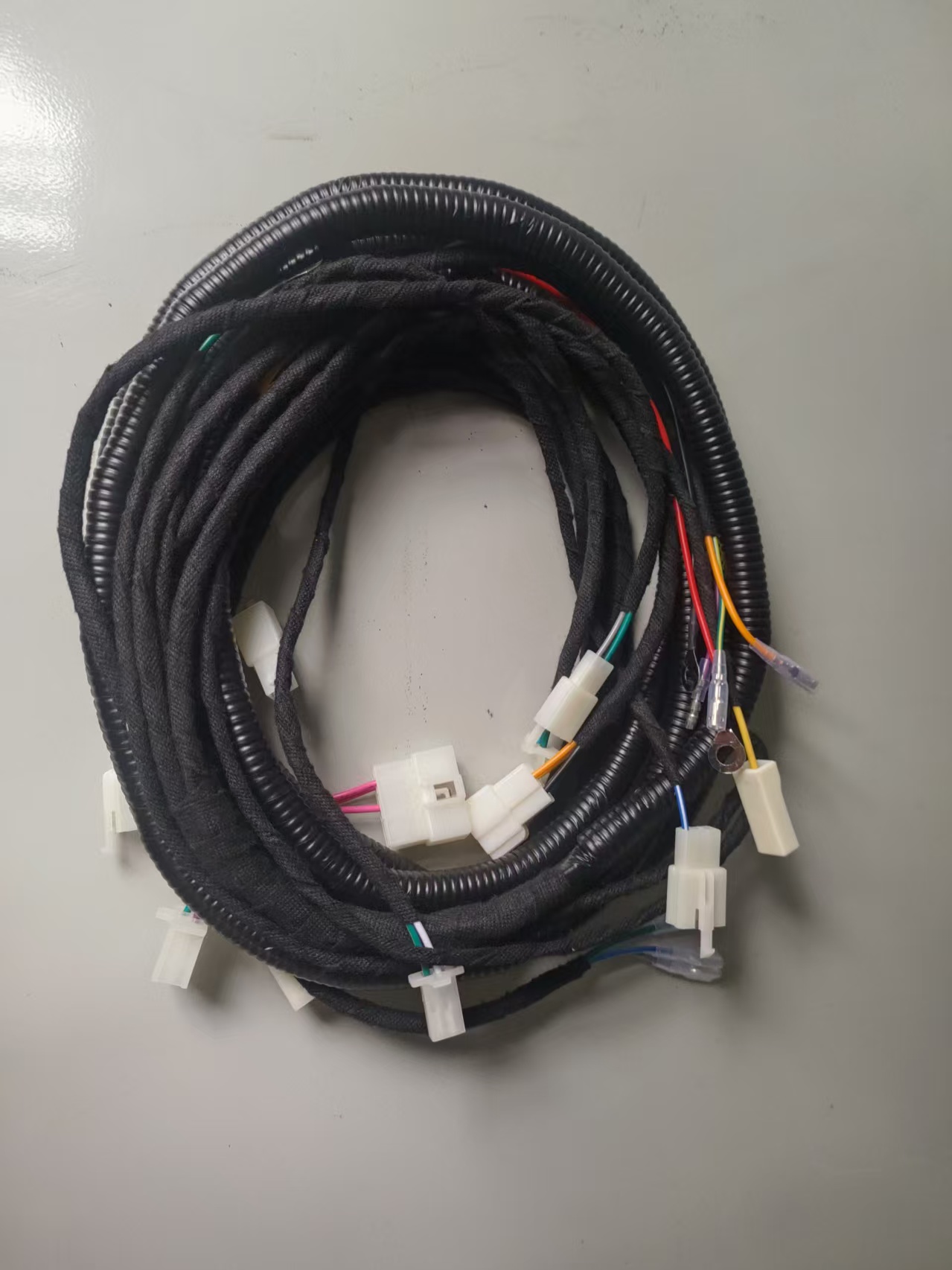
Wiring harness
06

Wiring Harness

Complete HV + LV vehicle loom · keyed connectors
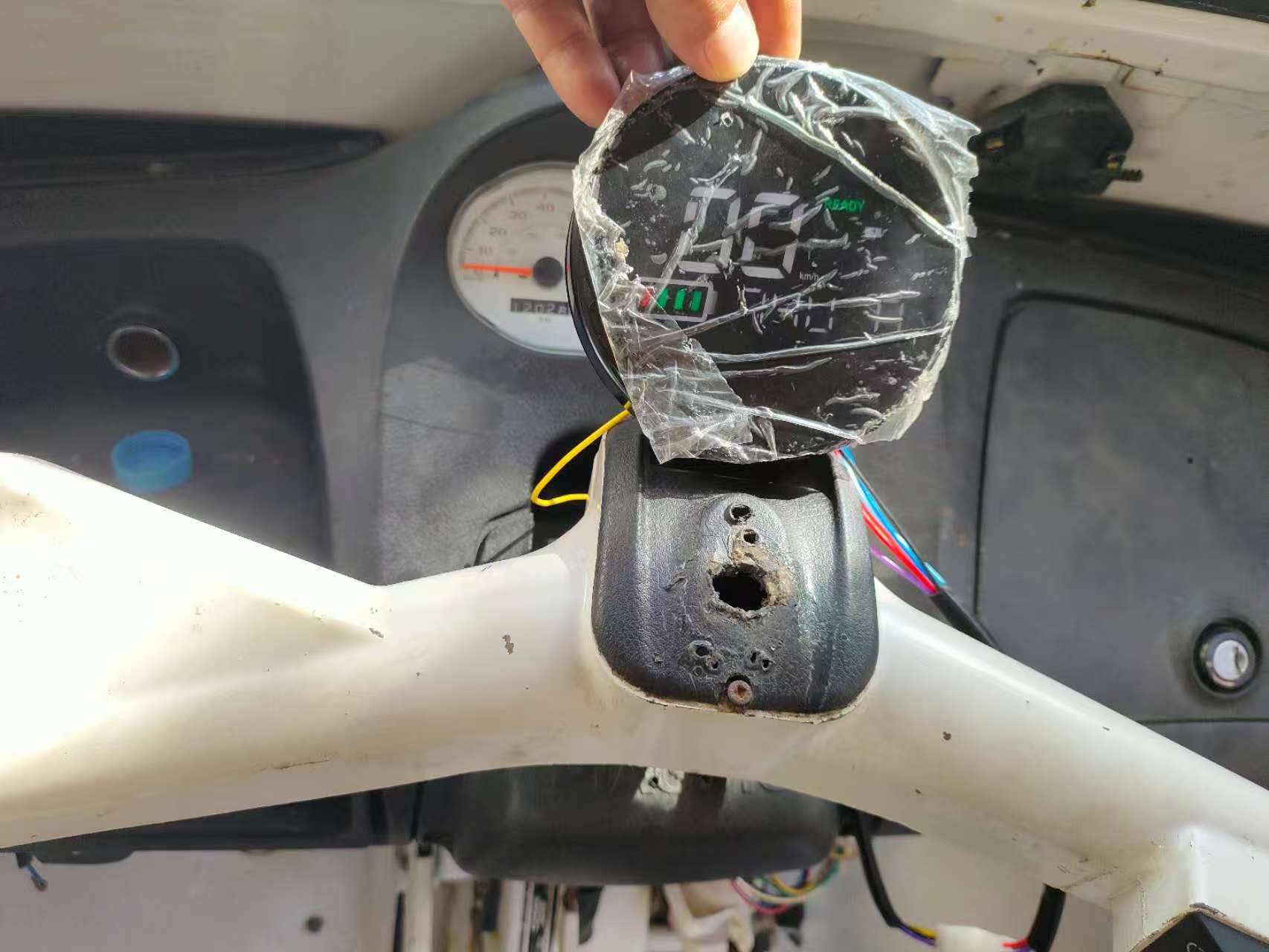
Digital dashboard
07

Digital Dashboard

Speed + state of charge · replaces original cluster

D·R·3
08

Throttle & Controls

Throttle grip with D/R selector + 3-speed mode · key switch · charge port

72→12
09

DC-DC Converter

72 V → 12 V · 22 A auxiliary supply for lights, horn and accessories

8 kWh

LFP battery module — under-seat installation

72 V / 120 Ah lithium iron phosphate pack with CAN-enabled BMS. EV-grade cells from Tier-1 Chinese cell makers, ~2,000-cycle design life. 10 / 12 kWh-class options and lease / swap-ready configurations on request.

100–120 kmRange
4–6 hAC charge
LFPChemistry
04 · Vehicle compatibility

Validated on TVS King. Bajaj platforms in adaptation.

Each supported model gets its own re-machined differential set, bracket kit and harness — validated on real vehicles before release.
TVS King
Available now

TVS King

Kit in production — brackets, differential set and harness validated. Standard installation ≈ 2 hours.
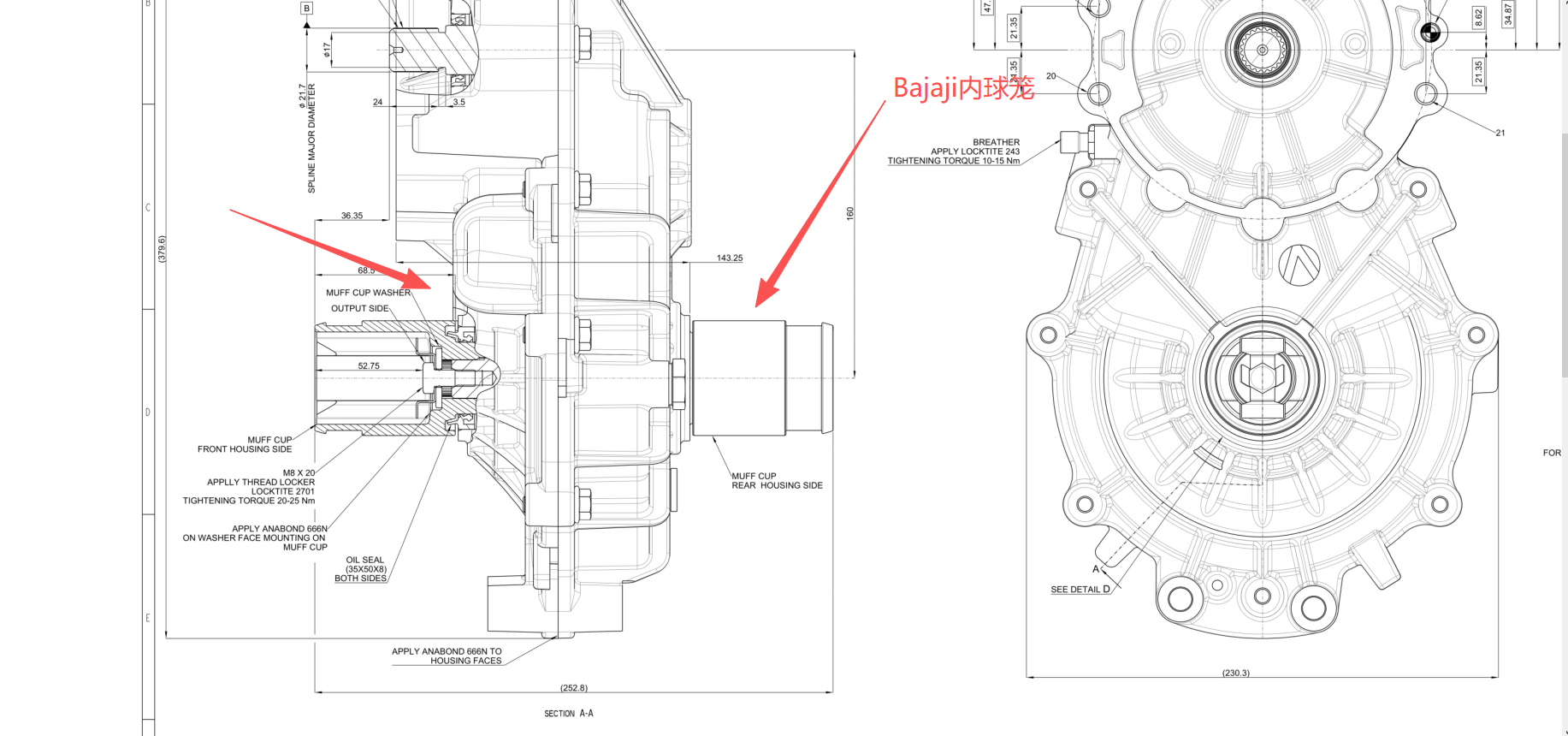
Bajaj differential engineering drawing
In adaptation

Bajaj RE

CV-joint interface drawings complete. Fleet pilot slots open for early customers.

C4-B-MAXIMA
In adaptation

Bajaj Maxima

Differential assembly drawings prepared; chassis validation next. Contact us to register fleet demand.

05 · Installation

A two-hour conversion, by trained local mechanics

Designed for ordinary workshop conditions — no chassis cutting, no welding to the frame. Technician training and certification support available for fleet partners.
Step 1
Inspect & strip

Chassis check; remove engine, fuel system, exhaust.

Step 2
Bolt in powertrain

Differential, motor, gearbox — OEM shafts refit directly.

Step 3
Wire & fit battery

Harness, under-seat LFP pack, dashboard and controls.

Step 4
Calibrate & QC

Calibration, checklist inspection, test drive, handover.

06 · Key specifications

Reference configuration — TVS King

SubsystemSpecification
Motor72 V PMSM · 4 kW rated / 8 kW peak · 65 N·m peak · 6,000 rpm max · IP67 · air-cooled
Controller72 V · 510 A max AC output · CAN 2.0 · IP66 · cruise / anti-theft / multi-mode
Gearbox + DifferentialSingle-speed 8:1 reduction, rear drive · re-machined differential matching OEM CV joints · inner CV joints supplied
Battery8 kWh LFP (72 V / 120 Ah) · CAN BMS · ~2,000 cycles to 70% · under-seat · EV-grade cells
ChargingAC charge 4–6 h · on-board charge port
PerformanceTop speed 55–60 km/h · range 100–120 km · gradeability ≥ 20% · noise 55–60 dB
AuxiliariesDC-DC 72→12 V / 22 A · digital dashboard · throttle with D/R + 3-mode · model-specific harness & brackets
CompatibilityTVS King — available now · Bajaj RE / Bajaj Maxima — in adaptation
CTA · Request a Quote

Tell us about your fleet.

Kit pricing depends on vehicle model, battery configuration and order volume — send your fleet profile and we come back with a configuration and a quotation.

Email  alpha@alphaecosys.com
Reply time  within 2 business days